
Pet Hit by a Car in Utah? Emergency Steps That Could Save Their Life
April 27, 2026
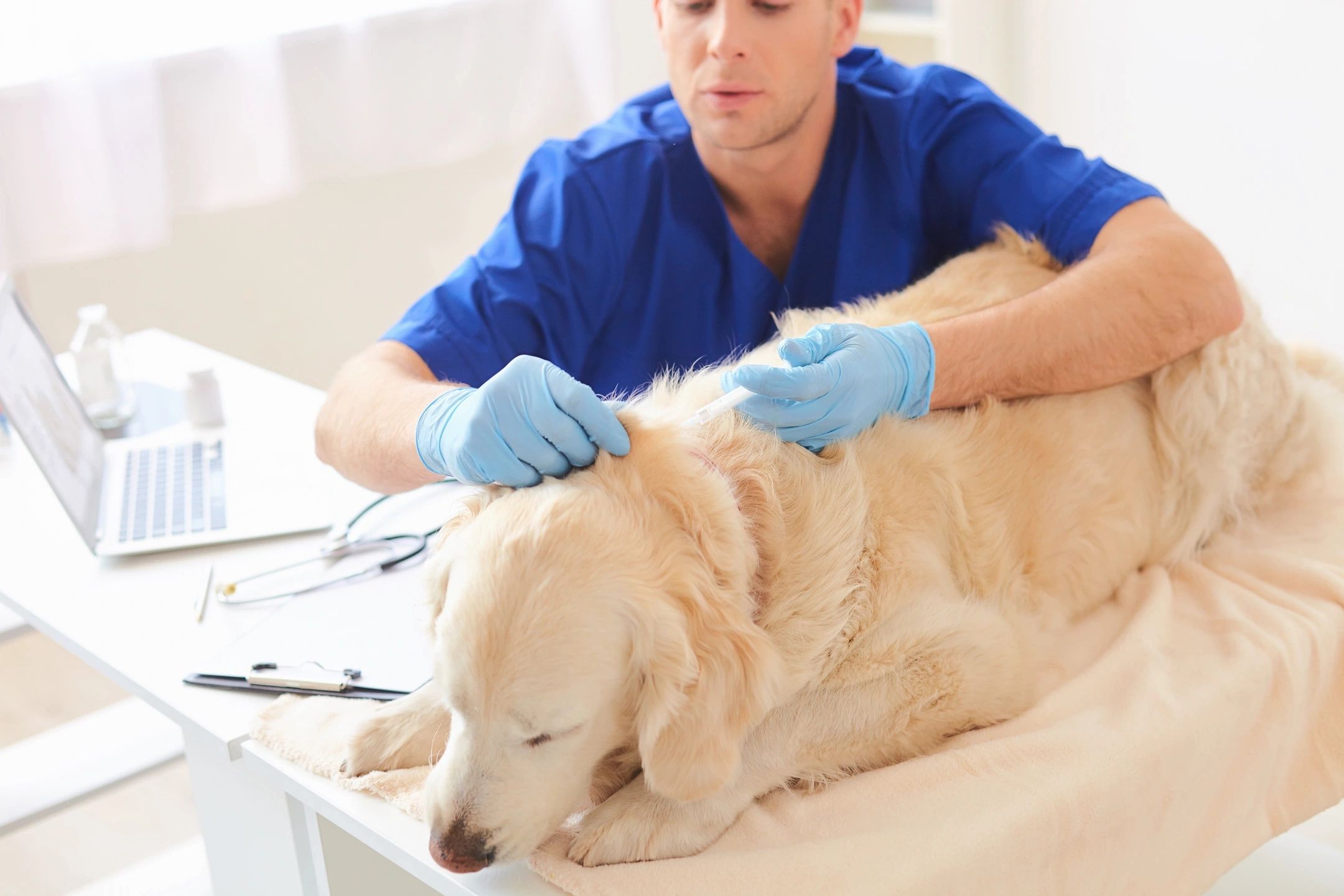
If your dog or cat has just been hit by a car, call Utah Veterinary Emergency Center now: (801) 218-2227. We are the closest walk-in urgent care hospital for Herriman, South Jordan, West Jordan, Riverton, Bluffdale, Eagle Mountain, and Saratoga Springs. Keep reading for the exact steps to take in the next 60 seconds — they can save your pet's life.
The Problem Gets Worse Every Summer
Every spring and summer, our veterinary team sees a sharp rise in "HBC" cases — veterinary shorthand for hit by car. The reasons are predictable. Windows and doors are open more often. Kids come and go. Family dogs follow the scent of a rabbit across Herriman's foothill trails. Outdoor cats roam further in warm weather. New housing developments in Eagle Mountain, Saratoga Springs, and Bluffdale are putting more pets near more roads every year.
If you are reading this because something just happened: breathe, and keep scrolling. The next few minutes matter more than the next few hours.
If you are reading this before something happens: even better. Save this page. Screenshot the phone number. Share it with your dog walker, your nanny, your teenager, and anyone else who might be the first person at the scene.
In the First 60 Seconds: What to Do Right Now
1. Make the scene safe before you touch your pet
It sounds obvious, but panic overrides it. A dog in the middle of Bangerter Highway or Redwood Road is not safe, and neither are you. If you can, move oncoming traffic around the scene — hazards on, phone flashlight if it's dark, another adult waving cars down if one is available. Only then approach your pet.
2. Assume they are in shock
Even pets that appear "fine" after a significant impact are often in circulatory shock. Their gums may turn pale or muddy. Their breathing may be fast and shallow. Their extremities may feel cold. They may be unusually quiet or unusually agitated. A calm-looking pet after a car strike is not a safe pet. Internal bleeding, ruptured bladder, diaphragmatic hernia, and pulmonary contusions can all present with a pet that "seems okay" for the first 20 to 60 minutes.
3. Muzzle, even if they have never bitten
This is the single most important thing most pet owners do not expect to hear. Pets in pain will bite the person they love most. It is not personal, and it is not a character flaw in your dog or cat. It is neurology. If you have a leash, a necktie, a shoelace, or a strip of cloth, loop it around the muzzle and tie it behind the ears. For cats and short-nosed breeds (pugs, bulldogs, Persians), use a towel or jacket to gently wrap the body instead — a "kitty burrito."
Skip this step only if your pet is struggling to breathe, vomiting, or unconscious.
4. Stabilize the spine as you move them
Use a flat rigid surface if possible — a cookie sheet, a piece of cardboard, a boot-liner, the flat part of a cargo tray. For larger dogs, a blanket held taut between two people works well. The goal is to move the pet as a single unit, keeping the spine straight. Do not lift by the legs. Do not let the body sag.
5. Call us on the way, not after you arrive
Call Utah Veterinary Emergency Center while someone else drives. When you call ahead, our team can prepare the triage bay, draw up emergency drugs, and meet you at the door with a gurney. Minutes saved in the parking lot are minutes added to your pet's life.
What NOT to Do
A few well-intentioned mistakes make outcomes worse. Please avoid all of these:
- Do not give human pain medication. Ibuprofen, acetaminophen (Tylenol), naproxen, and aspirin are all dangerous or fatal to dogs and cats at common household doses. Acetaminophen in particular is lethal to cats in single-tablet quantities.
- Do not offer food or water. If your pet needs surgery — and a significant HBC case often does — anything in the stomach delays anesthesia and increases aspiration risk.
- Do not wait to "see how they do." The most dangerous internal injuries after a car strike are the ones with a delayed presentation. Pulmonary contusions often worsen over 12 to 24 hours. A ruptured bladder may not show signs until toxins build up. A diaphragmatic hernia can decompensate hours later. Even a pet that walks away from the accident needs to be seen.
- Do not drive to a closed clinic. Most general-practice veterinarians in the Salt Lake Valley are not open overnight, on Sundays, or on holidays. Driving to a closed door costs you time you cannot get back. Dedicated hospitals like UVEC are built for exactly this moment.
The Hidden Injuries You Cannot See
When owners describe an HBC case, they usually focus on what they can see — a limp, a scrape, a bloody paw. The injuries that actually take a pet's life are almost always internal. Our team is specifically watching for:
Pulmonary contusions (bruised lungs)
Blunt-force trauma to the chest bruises lung tissue. The bruising often swells over the first 24 hours, reducing oxygen exchange. A pet that was breathing normally at the scene may be in respiratory distress by the next morning. We monitor this with chest X-rays, pulse oximetry, and in-hospital observation.
Pneumothorax (air around the lungs)
A rib fracture or lung tear can allow air to escape into the chest cavity, collapsing the lung. Signs include rapid shallow breathing, open-mouth breathing in cats, and blue-tinged gums. This is an immediate surgical or drainage emergency.
Diaphragmatic hernia
The diaphragm is the muscle separating the chest from the abdomen. A car strike can tear it, allowing abdominal organs to move up into the chest. Pets may appear stable for hours before suddenly decompensating. Diagnosis requires imaging; repair requires surgery.
Internal bleeding
The spleen, liver, and kidneys are all vulnerable in blunt-force trauma. A pet bleeding internally may have pale gums, a distended belly, weakness, and a dropping heart rate. We diagnose with focused abdominal ultrasound (AFAST) within minutes of arrival.
Ruptured bladder
One of the most commonly missed HBC injuries. The bladder can tear without any external sign. The pet may urinate a small amount of bloody urine and then stop producing urine altogether. Toxins build up in the bloodstream over 24 to 48 hours. Early diagnosis dramatically changes the outcome.
Pelvic and spinal fractures
Often audible, often visible, and always painful. Some pelvic fractures heal with strict rest; others require surgical fixation. Spinal trauma requires immediate neurological assessment to protect function of the hind limbs and bladder.
Head trauma
Pupils that are unequal in size, disorientation, seizures, or loss of consciousness all signal brain injury. Outcomes are time-sensitive and depend heavily on rapid intervention.
The takeaway: even a pet that walks away from a car needs to be examined within the hour. A normal physical exam is good news. A normal physical exam plus normal imaging and bloodwork is better news. Until both are confirmed, assume your pet is hurt.
What to Expect When You Arrive at UVEC
When you pull into our parking lot in Herriman, our triage team will meet you at the door. Here is what happens next:
Immediate triage (0-5 minutes). A technician will assess your pet's airway, breathing, circulation, and level of consciousness. If they are unstable, they go straight to the treatment area. You will be asked to stay in the lobby briefly while we stabilize.
IV access and initial diagnostics (5-20 minutes). We place an IV catheter, draw bloodwork, and often give oxygen, pain medication, and IV fluids. A focused ultrasound of the chest and abdomen (TFAST/AFAST) happens bedside, usually within the first 10 minutes. Chest and abdominal X-rays follow as indicated.
Conversation with the DVM (20-40 minutes). Once your pet is stable, the veterinarian will sit down with you to review findings, discuss next steps, and walk through treatment options and estimated costs. We believe in transparent communication. You will not be surprised by a bill.
Ongoing care (hours to days). Depending on findings, your pet may be discharged with medication and rest instructions, admitted for overnight monitoring, or taken directly to surgery. We coordinate with your primary veterinarian for follow-up care.
Specific Risks by Neighborhood
Every community in our service area has its own HBC risk profile. Knowing yours helps you prevent the next emergency.
Herriman. The combination of new construction along Mountain View Corridor and the foothill trail system means off-leash dogs frequently cross roads in pursuit of deer, rabbits, and coyotes. Evening walks on busy connector roads are the highest-risk window.
South Jordan and West Jordan. Bangerter Highway, Redwood Road, and 10400 South are the highest-fatality corridors for pets. Off-leash dogs that slip out of open garages are the most common scenario we see from these communities.
Riverton and Bluffdale. Rural-residential properties with larger lots and minimal fencing produce a specific pattern: dogs drift to the road over time, and one day they do not come back. Invisible fences fail more often than owners realize, especially with high-prey-drive breeds.
Eagle Mountain and Saratoga Springs. Rapid development, long commutes, and loosely enforced leash norms combine here. We see a disproportionate number of young, large-breed dogs hit in the early morning and evening — the exact windows when drivers are rushed and light is poor.
If you live in any of these communities, the five-minute drive to UVEC in Herriman is almost always faster than driving across the valley to a 24-hour hospital in Murray or South Salt Lake. Save our number now, before you need it.
Prevention: The Conversation We Wish More Families Had
Most of the HBC cases we see are preventable. A few honest habits dramatically reduce the odds:
- Assume every off-leash dog is one squirrel away from the road. Recall training is wonderful until a deer breaks from a bush on a Herriman foothill trail. A long-line is a better safety tool than any training program for the first two years of a dog's life.
- Keep cats indoors or in a catio. The life expectancy of an outdoor cat in a suburban Utah neighborhood is dramatically lower than an indoor cat, and cars are the leading cause.
- Check the garage door every time. One of the most common stories we hear begins with "the garage door was only open for a second."
- Microchip everyone. Not because it prevents the accident, but because when a stranger in Riverton or Bluffdale finds your injured pet on the side of the road, the microchip is how we reach you. Register the chip. Keep the contact information current.
- Fence the actual yard, not the invisible one. Invisible fences are only as reliable as the battery in the collar. A physical fence is a better investment than a surgery bill.
Frequently Asked Questions
My dog was hit by a car but seems totally fine. Do I still need to bring them in?
Yes. The most dangerous HBC injuries — pulmonary contusions, internal bleeding, ruptured bladder, diaphragmatic hernia — can all present as a pet that appears normal for the first 1 to 24 hours. A quick examination and basic imaging is always worth it.
How much does an HBC emergency visit cost?
It depends on the severity of injuries. A stable pet with a clean exam, chest X-rays, and basic bloodwork is typically a few hundred dollars. A pet requiring surgery, transfusion, or multi-day hospitalization can reach several thousand. We provide a written estimate before any treatment beyond initial stabilization, and we will always discuss options with you.
Do you accept pet insurance?
We are happy to provide itemized invoices that your insurance carrier will accept for reimbursement. Payment is due at the time of service, and most carriers reimburse within a few weeks.
Is UVEC open 24 hours?
We are currently open 11am to 11pm, 7 days a week including the holidays.
Can I drive from Saratoga Springs or Eagle Mountain in time?
Yes. We are intentionally located on the west side of the Salt Lake Valley specifically to serve southwest communities. Most drives from Saratoga Springs, Eagle Mountain, Bluffdale, or Riverton to our hospital in Herriman are under 25 minutes, even during rush hour — typically faster than reaching a 24/7 emergency hospital farther north.
What if my pet dies on the way to the hospital?
We are deeply sorry. Please call us anyway. We can talk you through immediate next steps, help with after-hours cremation services, and — when you are ready — help you think through what to tell the kids.
We Are Here When You Need Us
Utah Veterinary Emergency Center was founded by a veterinarian and her family who believe the southwest Salt Lake Valley deserves world-class veterinary care that does not require a drive across the valley. We serve Herriman, South Jordan, West Jordan, Riverton, Bluffdale, Eagle Mountain, and Saratoga Springs every day of the year.
If you are in the middle of an urgent care need right now: call us, get in the car, and let someone else drive if you can. We will be ready when you pull up.
If you are reading this ahead of an urgent care event: save our number, share this page with your family, and take one small prevention step this week.
Utah Veterinary Emergency Center
5089 W 11800 S, Suite 102, Herriman, Utah 84096
Herriman, Utah
(801) 218-2227