
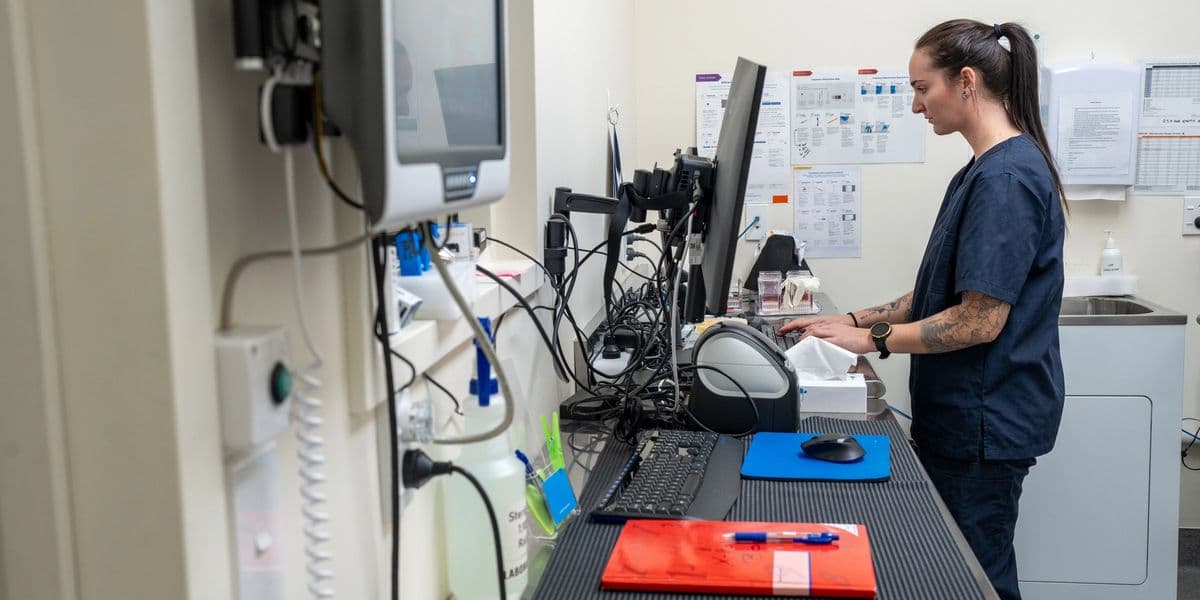
Digital radiology for crisp, fast diagnosis
Common reasons for X-rays
We frequently image limping and suspected fractures, spinal pain, coughing or labored breathing, vomiting with concern for obstruction, and abdominal pain. Digital capture gives us detail we can magnify and revisit, which supports better decisions for dogs and cats of all sizes.
How radiology fits your pet’s workup
Radiographs are one layer of the story. When needed, we combine X-ray with ultrasound, lab work, or physical exam findings so we are not treating a film—we are treating your pet.
Radiation exposure and safety
We follow ALARA principles (as low as reasonably achievable): only the views needed, proper positioning, and staff shielding. If you have questions about why an image is recommended, ask—we want you comfortable with the plan.
Common questions
How long do X-ray results take?
Images are available quickly. Your veterinarian reviews them during your visit and explains findings before you leave whenever clinically possible.
Does my pet need sedation for X-rays?
Some pets need light sedation or positioning aids for safe, diagnostic-quality images, especially when they are painful or anxious. We will recommend what is appropriate.
Call us or reach out — we're here to help you and your pet.